![Monday.com vs Miro : Which Team Tool Saves More Time? [2025 Guide]](https://crackkits.com/wp-content/uploads/2025/08/300x250-Never-switch-project-management-software-again.png)
Monday.com vs Miro: Real Team Results After 6 Months of Testing
![Monday.com vs Miro : Which Team Tool Saves More Time? [2025 Guide]](https://crackkits.com/wp-content/uploads/2025/08/MONDAY.webp "Monday.com vs Miro : Which Team Tool Saves More Time? [2025 Guide]")
Choosing between Miro and Monday.com [Monday.com vs Miro] isn’t as simple as it might seem. Miro has earned the trust of 60 million users worldwide, and the platform serves over 1 million businesses. Both tools are well-established leaders in the collaboration space. Our team tested both platforms extensively for six months and found a clear difference that could affect your workflow.
Miro stands out as a visual collaboration tool that works great for brainstorming and flexible project planning. Monday.com shines with its well-laid-out task management features. Users give Miro’s collaboration features a stellar 4.9 rating that outshines Monday.com‘s 4.5. This reflects Miro’s strength in infinite canvas and live features. The best tool for your team depends on your specific needs. Teams that focus on design and ideation will find Miro’s visual platform exceptional. Teams that need strong task tracking capabilities might prefer Monday.com.
Key Takeaways
After six months of real-world testing, here are the essential insights teams need when choosing between these collaboration platforms:
• Use both tools together for maximum impact – Miro excels at visual brainstorming while Monday.com dominates structured execution, creating a powerful workflow from ideation to completion.
• Choose based on your primary workflow needs – Select Miro if visual collaboration and design thinking drive your work, or Monday.com if task management and project tracking are priorities.
• Miro wins on collaboration features (4.9/5 vs 4.5/5) – Its infinite canvas, real-time editing, and 300+ templates make it superior for creative teamwork and brainstorming sessions.
• Monday.com offers better support and structure – With 24/7 support, guaranteed 1-hour response times, and robust task dependencies, it’s ideal for teams needing accountability and organization.
• Pricing starts similarly but scales differently – Miro begins at $8/member monthly while Monday.com starts at $9/seat monthly, with both offering free plans for small teams to test functionality.
The most successful approach isn’t choosing one platform over the other, but recognizing how their complementary strengths can transform your team’s workflow. Teams using both tools reported higher productivity gains than those limiting themselves to a single solution, as creative ideas from Miro seamlessly flow into actionable tasks within Monday.com‘s structured environment.
How Our Team Used Miro and Monday.com
![Monday.com vs Miro : Which Team Tool Saves More Time? [2025 Guide]](https://crackkits.com/wp-content/uploads/2025/08/MONDAY1.webp "Monday.com vs Miro : Which Team Tool Saves More Time? [2025 Guide]")
Image Source: Monday.com
We spent six months trying out both platforms by adding these tools to our existing workflow. Rather than picking one platform, we decided to use both tools together to help our team work better.
Initial Setup and Onboarding Experience
Setting up Miro within our Monday.com workspace was simple. We installed the Miro app from Monday.com‘s marketplace by searching for “Miro” and clicking “Install app.” Our team could create new Miro boards or add existing ones to our Monday.com interface after selecting our workspace. This setup lets us use both platforms’ features in one place, which makes work easier for our team.
Monday.com‘s onboarding template became crucial for new team members. This customizable checklist helped us track all essential tasks for newcomers. The template lets us assign specific onboarding tasks to team members and monitor progress. Research shows that employees are more likely to leave within their first week without a well-laid-out onboarding process.
Miro took a different approach to onboarding that centered on creative teamwork. New team members jumped right into existing boards and brainstorming sessions. Live collaboration on a single board helped new team members connect with colleagues quickly and work more efficiently.
Team Roles and Use Case Distribution
Each platform offered specific role-based access controls that we assigned to team members based on their jobs and needs.
Miro provided five primary roles:
- Owners managed board settings, configured sharing permissions, and handled board backups
- Co-owners (on the Business plan) managed content settings and collaboration tools
- Editors made changes to the board content and used various tools
- Commenters viewed content and left visible comments
- Viewers could only view the board content
Monday.com offered these roles:
- Admins acted as “super users” who managed the entire account
- Members created and edited boards, items, and folders
- Viewers accessed boards without editing rights
- Guests (external collaborators like clients) accessed only specific shareable boards
Our teams naturally found their preferred tools. Designers used Miro to visualize ideas and brainstorm together. Product teams created wireframes, user flows, and mind maps in Miro. Project managers and developers preferred Monday.com for task assignment, status tracking, and resource allocation.
Daily use showed the key difference: Miro excelled at visual team collaboration with powerful digital whiteboard tools but lacked some project management features beyond the ideation phase. So Monday.com became our Work Operating System that brought together different tasks in one place.
Connecting both platforms created a complete workflow where Miro’s brainstorming turned into actual tasks in Monday.com. The integration helped us document brainstorm results, run distributed agile rituals like retrospectives and story mapping, and build visual project hubs for all concept work. Using both platforms lets us stay creative while keeping work organized.
Visual Collaboration: Miro in Action
![Monday.com vs Miro : Which Team Tool Saves More Time? [2025 Guide]](https://crackkits.com/wp-content/uploads/2025/08/MONDAY2.webp "Monday.com vs Miro : Which Team Tool Saves More Time? [2025 Guide]")
Image Source: Miro
Miro turned out to be a game-changing visual collaboration tool that changed our team’s creative work approach. The platform’s infinite canvas became our creative space for visual thinking and shared ideas during our testing phase.
Brainstorming Sessions and Ideation Boards
Our team found the infinite canvas perfect for brainstorming. The space lets us capture ideas without limits. We used the platform’s sticky notes feature extensively. Team members could add their thoughts in real-time from anywhere.
The central idea or problem sat in the middle of our board during brainstorming sessions. Each new idea became a node on our virtual mind map as team members contributed. This created a visual web of connected concepts. Even our most creative discussions stayed organized this way.
The Rapid Ideation framework worked wonders for our team. We designed and discussed multiple solutions for the challenges we identified. The process started with everyone focusing on a specific problem. Next, we turned insights into “How might we?” challenge statements before sketching possible solutions. This method consistently gave us practical results.
Tip: The “Bulk mode” feature became essential for large-scale brainstorming. We could create multiple sticky notes at once by listing ideas that automatically appeared on the board.
Design Reviews and Mind Mapping
Mind mapping became crucial to our design process. Our team used Miro’s mind map maker to capture and structure ideas visually. Complex projects start with a central concept. We built branches outward to create a clear picture that showed how different elements connected.
Miro’s structured approach made design reviews better. The Design Review Template helped us create productive conversations beyond just sharing opinions. Our template guided us through these steps:
- Presenter’s overview of actions and rationale
- Reviewer questions followed by presenter explanations
- Positive and constructive feedback from reviewers
- Recording of ideas and action items
This method helped us find hidden design flaws and build team unity. The ability to collapse and expand mind map branches lets us present at different detail levels. New users could better understand complex visual structures.
Remote Workshops and Sticky Notes
Our distributed team ran engaging remote workshops that matched in-person sessions thanks to Miro. The collaborative whiteboard helped us customize workshop layouts. We used frames for structured presentations and added interactive elements like sticky notes and shapes.
Sticky notes became essential to our remote workshops. They worked great for quick brainstorming, note-taking, and information organization. We used them to:
- Add tags to structure tasks and ideas
- Use emoji reactions for voting and feedback
- Arrange note groups into organized rows or columns
- Import spreadsheet data as sticky note clusters
Miro’s attention management features made remote workshop facilitation smooth. The “Bring everyone to me” function kept participants focused on specific board sections during guided activities. The timer feature helped us keep workshop segments on track.
Regular Miro use gave everyone in our organization equal creative power. Team members contributed ideas through sticky notes and other tools. Virtual meetings became more dynamic and engaging than regular video calls.
Structured Execution: Monday.com in Action
![Monday.com vs Miro : Which Team Tool Saves More Time? [2025 Guide]](https://crackkits.com/wp-content/uploads/2025/08/MONDAY3.webp "Monday.com vs Miro : Which Team Tool Saves More Time? [2025 Guide]")
Image Source: Monday.com
Monday.com became our team’s command center for structured execution, while Miro excelled at visual ideation. We found how Monday.com‘s strong task management features changed our workflow from concept to completion during our six-month testing period.
Monday.com vs Miro: Task Assignment and Status Tracking
Monday.com‘s People Column made task assignment easy and ensured accountability across our team. We added this column with a simple “+” sign click and typed team members’ names into each cell. Note that you can add multiple people or entire teams to a single task, which worked great for shared projects.
Team members got bell notifications about their tasks, and optional email alerts made sure nothing was missed. The “My Work” feature became a team favorite. We accessed it through the calendar icon in the left panel to see all assigned tasks from different boards in one place.
We used customizable Status Columns with color-coded labels that showed progress quickly. The system lets us create up to 40 status labels with different colors to match each department’s workflow. Yes, it is helpful that we added descriptions to our labels so everyone understood what each status meant.
The Progress Tracking Column showed our productivity like a battery meter by combining all status columns. This tool calculated overall progress automatically based on completed tasks and showed project advancement instantly.
Workflow Automation and Notifications
Monday.com‘s automation features significantly reduce our manual work through a no-code system with three parts: triggers, conditions, and actions. To name just one example, see how we set up automations that moved tasks to “Completed” when marked “Done” or sent reminders as deadlines got closer.
Managing notifications proved valuable with six different channels: update feed, bell icon, email, desktop, Slack, and mobile. These alerts kept everyone updated without information overload. Each team member could customize their email notifications based on their priorities about which updates they wanted.
We set up special automations for high-priority tasks that alerted the team when essential items came up. This way, critical work stayed visible and got the attention it needed.
Sprint Planning and Resource Allocation
The Sprint Planning template changed our agile workflow management completely. We had one place to track iterations, assigned tasks, estimated completion times, and priority levels. Our groups lined up with each sprint—backlog in one group and active sprint in another, which kept everything clear across multiple development cycles.
Resource allocation became easier with the Workload View. The calendar-based display showed who had too much on their plate. Team members appeared on the y-axis with their tasks spread across the timeline, and color-coded bubbles pointed out capacity issues right away.
Monday.com‘s time tracking helped us monitor story points and billable hours to better forecast future projects. So our resource planning got more accurate as we collected data about how long tasks took.
Looking at Monday.com versus Miro for execution, Monday.com‘s well-laid-out approach gave our team the structure needed to turn creative ideas into results. Miro gave us space to brainstorm, but Monday.com drove our projects forward with clear accountability.
Monday.com vs Miro: Feature Comparison After 6 Months
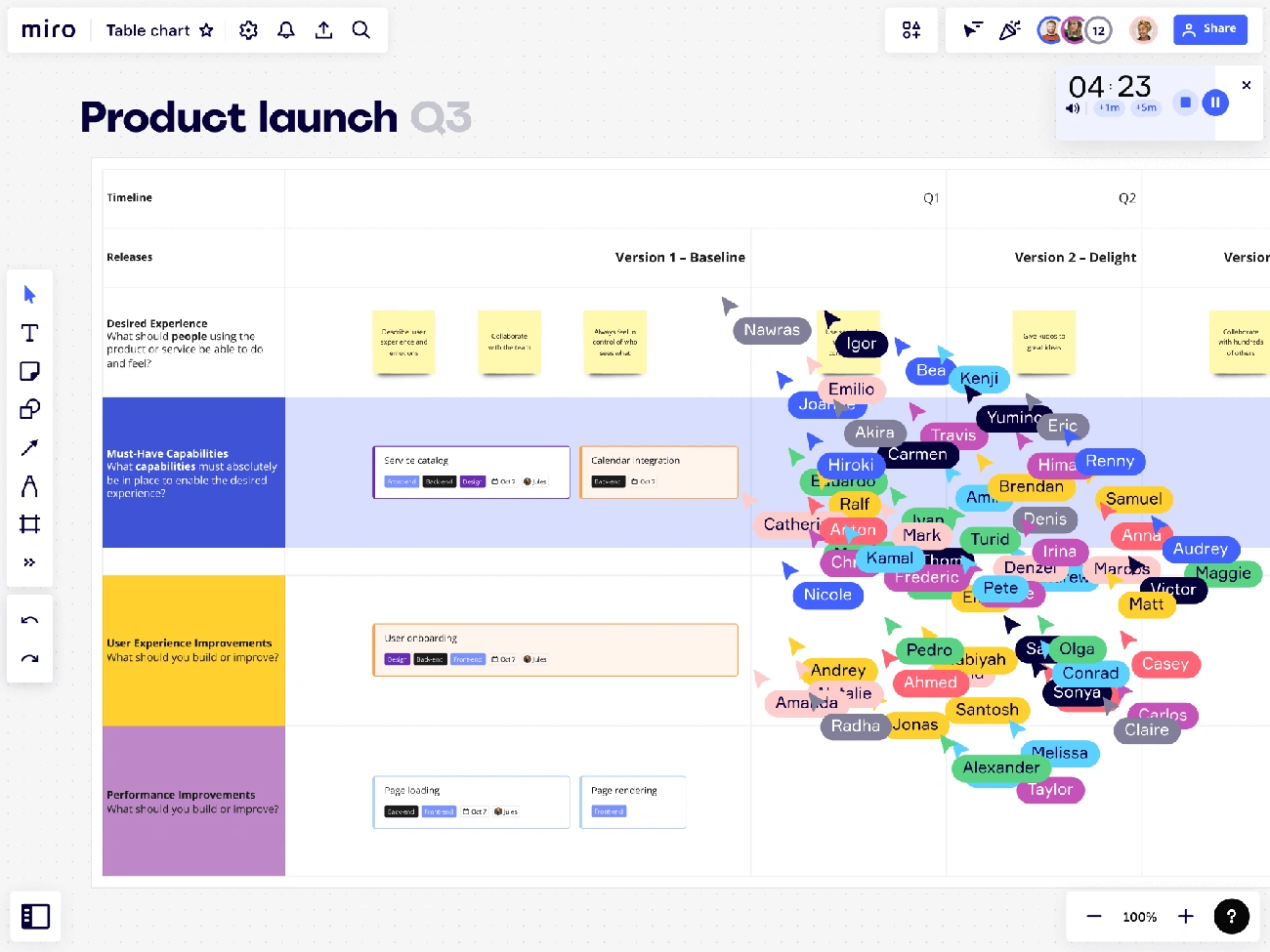
Image Source: Capterra
Our team used both platforms daily for six months. We noticed apparent differences in features that shaped our workflow choices. Testing both tools gave us a clear picture of what teams should think about when picking either platform.
Board Customization and Templates
Miro’s template library stands out with over 300 custom-crafted templates ready for everyday use. Teams can work together within seconds of starting a new project. These ready-made frameworks cover Design Thinking exercises, Agile rituals, and decision-making tools that speed up getting started.
Monday.com shines with its 15+ board views. The Workload View is beneficial as it shows team capacity right away. Project leads can see each team member’s availability quickly, which makes task assignment easier.
Both platforms let you customize extensively. Miro’s “Intelligent templates” blend AI, interactive tools, and integrations into smooth experiences for sprint planning and roadmapping. Monday.com excels at automation that removes repetitive tasks from workflows.
Real-time Collaboration Tools
Miro shows better functionality in real-time teamwork—live cursors and commenting boost team communication. The platform’s endless canvas and visual workspace help develop comprehensive strategies during team sessions.
Monday.com takes a different path with real-time collaboration. It focuses on organized updates instead of free-flowing interaction. Team communication works well through in-task comments, @mentions, and immediate updates. All the same, Miro’s collaboration features scored 4.9 compared to Monday.com’s 4.5 in user reviews.
Miro’s video calling sets it apart. Teams can chat while brainstorming and working on visual projects together. Other tools keep communication separate from content creation.
Task Dependencies and Time Tracking
Monday.com gives you advanced task management with subtasks, dependencies, and milestones. Time tracking helps log work hours and monitor team output throughout projects.
The platform makes time tracking simple. You can switch the timer on and off or add time manually. The mobile app lets you track time anywhere – perfect for remote teams.
Miro doesn’t have strong task dependency or time tracking features. Teams usually move work to Monday.com when projects transition from planning to execution. Monday.com becomes the primary work platform.
Other teams’ reviews show consistent patterns. Monday.com users praise its user-friendly task management, noting how easy it is to track tasks, statuses, priorities, and deadlines with color codes. Miro users value its flexible project planning and ability to work with large groups.
Integration and Workflow Compatibility
Both platforms’ ability to work with other tools played a key role in our workflow success during the six-month testing period. Miro and Monday.com both offer reliable connection options, but they serve different roles in boosting team productivity.
Tool Integrations Used by Our Team
Our team used the extensive integration libraries of both platforms. Miro connects to more than 160 tools [link_1], while Monday.com offers over 200 integrations. Here’s how we used Miro:
- Microsoft Teams integration brought teams together around Miro boards during meetings and asynchronous discussions
- Jira Cards helped us visualize, edit, and create Jira tasks right in our visual workspace
- Slack integration tracked Miro activity and kept notifications in one place
- Confluence synced both ways to improve documentation with embedded Miro canvases
Our Monday.com integration priorities included:
- Email platforms turned emails into actionable items automatically
- Cloud storage connections with Google Drive and Dropbox brought our file management together
- CRM systems brought customer data into our project workflows
- Communication tools added video conferences right into tasks
The official Miro app in Monday.com lets our team members use Miro’s whiteboard features without switching platforms.
How Each Tool Fits into Our Tech Stack
We thought we’d pick one platform over the other at first. As testing went on, we found they worked together perfectly within our technology ecosystem. Miro became our central hub for strategy development and project planning. It brought the whole ideation process together. Its reliable SDK and Live Embed features merged well with our existing tools.
Monday.com served as our Work Operating System (Work OS). Teams had one central place to work together while connecting all our different apps. This setup broke down silos by sharing data across tools and operations.
Daily usage showed the most significant difference: Miro helped break down information barriers during creative work and encouraged a more connected visual workflow. Monday.com automated connections between systems, which freed our team from repetitive data entry and reduced errors.
Both platforms together gave us the best results. Ideas from Miro’s visual workspace flowed naturally into structured execution in Monday.com. This created a unified workflow that supported both creative exploration and focused implementation.
Team Feedback and User Ratings
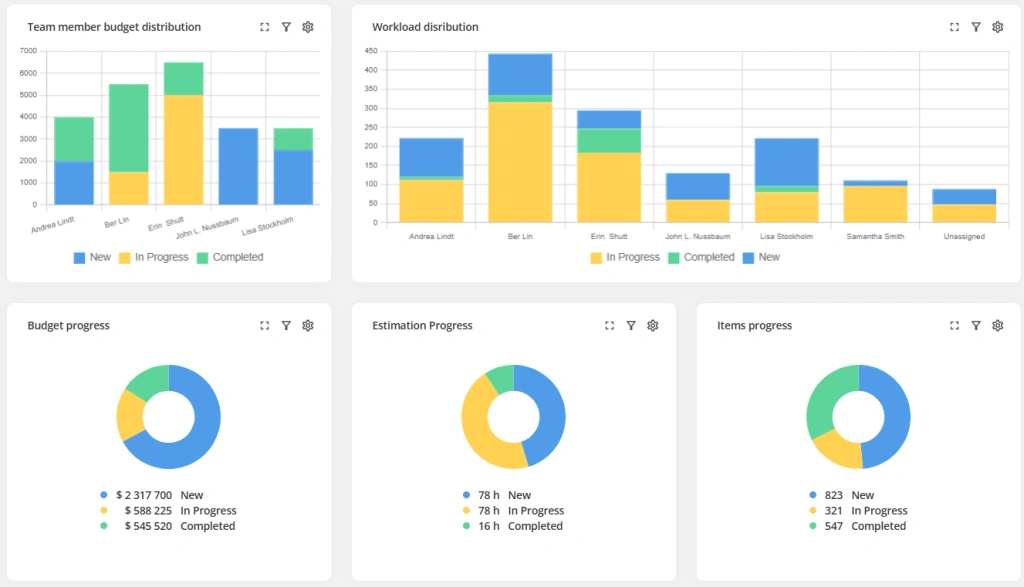
Image Source: Teamhood
User feedback and ratings are the foundations of our evaluation process and have taught us more than our direct experience could. Our team’s sentiment over the six-month trial showed clear priorities based on roles and work styles.
Ease of Use: Designers vs Project Managers
The design team rated Miro higher for usability and loved its templates, infinite canvas, sharing capabilities, and live editing features. One designer noted, “Brainstorming projects have never been this fun”. Creative professionals in our organization valued Miro’s visual approach. External reviews backed this up—design company employees mentioned how Miro made collaboration “easy” during their design process.
Project managers preferred Monday.com‘s structured interface. They praised its task management simplicity. One manager said that “it’s probably the easiest to use platform for task management, the design is great, and the overall performance is excellent”. This split between roles matched wider industry feedback. Miro scored 4.5/5 for ease-of-use, and Monday.com earned a similar 4.5/5. The user experience differed based on workflow needs.
Support Experience and Response Time
Both platforms showed apparent differences in support quality. Monday.com offers 24/7 support teams with “a guaranteed response within an hour”. This promise held during our testing period. A team member who reached out to Monday.com support said they “helped me solve my problem quickly and I didn’t have to do anything on my side”.
Miro users often struggled with access to support. One source pointed out, “Miro isn’t known for its customer service. Customers who have technical or billing questions will struggle to connect with a real person and must reach the company via a request submission form”. We faced similar issues when fixing integration problems.
Overall Satisfaction Scores
User ratings from multiple platforms show Miro holds a slight lead in overall satisfaction. Miro scored 4.7/5 from 1,647 reviews, while Monday.com earned 4.6/5 from 5,588 reviews. Here’s how the ratings break down by category:
- Value for Money: Miro scored 4.4/5 compared to Monday.com‘s 4.3/5
- Customer Support: Monday.com led with 4.4/5 versus Miro’s 4.3/5
- Functionality: Miro topped with 4.6/5 against Monday.com‘s 4.4/5
Of course, Miro’s collaboration features earned the highest praise. Reviewers rated these capabilities at 4.9 compared to Monday.com‘s 4.5. Teams that focus on visual collaboration pick Miro over alternatives, despite its support limitations.
Monday.com vs Miro: Cost vs Value Over Time

Image Source: Medium
Our analysis of both platforms’ financial effects revealed key learnings for teams looking at Miro or Monday.com as their collaboration solution.
Monthly Cost Breakdown by Team Size
The pricing structure shows Miro’s Starter plan costs $8 per member monthly (billed annually), while the Business tier costs $16 per member monthly. Monthly billing rates are $10 and $20, respectively. Monday.com‘s Basic plan starts at $9 per seat monthly, Standard costs $12, and Pro tier runs $19 (all billed annually).
Small teams can use Miro’s free plan with three editable boards and unlimited members. Monday.com‘s free version allows up to 2 seats with a maximum of 3 boards. This difference matters more as teams expand. Miro’s Enterprise plan begins at 30 members with custom pricing, making it a good fit for larger organizations that need extensive collaboration tools.
ROI Based on Productivity Gains
Users share different value perspectives. Miro’s reviewers like its feature-rich free version and fair pricing for paid plans. Monday.com users appreciate the complete functionality and flexible pricing, though some small businesses find it expensive.
CHECK OUT OUR BANNERS TO GET A 30-DAY FREE TRIAL FROM US
![Monday.com vs Miro : Which Team Tool Saves More Time? [2025 Guide]](https://crackkits.com/wp-content/uploads/2025/08/970x250-Never-switch-project-management-software-again.png)
Our team found the productivity boost worth the investment. Both platforms showed similar value scores—Miro rated 4.4/5 while Monday.com scored 4.3/5. The final choice ended up depending on workflow needs rather than cost alone.
Hidden Costs and Upgrade Triggers
Several factors led to extra expenses beyond subscription fees. Miro’s limit of 3 boards in the free plan pushed teams to upgrade quickly as projects grew. Both platforms charge 20-25% more for monthly versus annual plans.
Extra costs included Miro’s AI credits (10-100 per member monthly by plan) and Monday.com‘s automation actions (250 to 25,000 monthly based on tier). The need for upfront capital posed challenges for smaller teams, especially with annual subscriptions required for significant discounts (18% for monday.com).
Monday.com vs Miro: Which Tool We Chose and Why

Image Source: Miro
We ended up using both platforms after careful consideration instead of picking just one. This approach came from understanding how well they complement each other.
Final Decision Based on Team Needs
Choosing between Miro and monday.com isn’t about which one is better – it’s about finding the right tool that matches your team’s specific needs. Miro became our creative center for visual collaboration, and Monday.com handled our structured project management. Our designers flourished with Miro’s infinite canvas while project managers managed to keep track of everything through Monday.com‘s strong task-tracking system.
What We Missed from the Other Tool
Monday.com alone would have meant losing Miro’s unique brainstorming and visualization features. Similarly, Miro by itself would have restricted our access to Monday.com‘s detailed project management capabilities and round-the-clock support team.
CHECK OUT OUR BANNERS TO GET A 30-DAY FREE TRIAL FROM US
Tips for Teams Choosing Between Them
Teams making this decision should:
- Assess your main workflows—pick Miro for visual collaboration or Monday.com for structured project management
- Think over integration needs—both platforms work with popular tools like Slack and Microsoft Teams
- Look at support requirements—Monday.com provides more responsive customer service
- Start with free versions—test both platforms with your actual workflows before committing
- Note that pricing varies—Miro costs $10/user monthly, while monday.com starts at $9/seat monthly for paid plans
Monday.com vs Miro: Comparison Table
Feature/Aspect |
Monday.com |
Miro |
| Starting Price (Annual) | $9/seat/month (Simple) | $8/member/month (Starter) |
| Free Plan Limit | 2 seats, 3 boards | 3 editable boards, unlimited members |
| Overall User Rating | 4.6/5 (from 5,588 reviews) | 4.7/5 (from 1,647 reviews) |
| Collaboration Rating | 4.5/5 | 4.9/5 |
| Ease of Use Rating | 4.5/5 | 4.5/5 |
| Value for Money Rating | 4.3/5 | 4.4/5 |
| Customer Support Rating | 4.4/5 | 4.3/5 |
| Functionality Rating | 4.4/5 | 4.6/5 |
| Number of Integrations | 200+ | 160+ |
| Support Response | 24/7 with a 1-hour response guarantee | Request submission form only |
| Main Strength | Structured task management & project execution | Visual collaboration & brainstorming |
| Best For | Task tracking, resource allocation, and sprint planning | Design thinking, ideation, and visual workflows |
| Board Views | 15+ different views | Infinite canvas |
| Templates | Not specified | 300+ custom-crafted templates |
| Core Features | Task dependencies, time tracking, and workload view | Immediate collaboration, video calling, live cursors |
Monday.com vs Miro: Conclusion
Our team spent six months testing both platforms and found that comparing Miro to Monday.com isn’t about picking a winner. Each platform stands out in its way – Miro offers exceptional visual collaboration, while Monday.com provides a strong project management system. We decided to use both tools together instead of choosing between them.
Miro shines during the project’s creative phases. The infinite canvas makes it perfect for brainstorming, design thinking, and team ideation. Monday.com shows its strength when projects move from ideas to action, with detailed task tracking, resource allocation, and transparent reporting.
Both platforms need time to learn and cost money, but the productivity gains made our investment worthwhile. Teams should review their main workflows and collaboration needs first. Visual thinkers and design teams will love Miro’s collaborative features. Teams that need organized task management might prefer Monday.com‘s structured approach.
The tools work together smoothly for our team. Ideas we created on Miro boards became actual tasks in Monday.com. This created a natural flow from creative thinking to getting things done. Using both platforms helped us avoid the limitations of picking just one tool.
User ratings-
-matched what we experienced. Miro scored slightly better overall (4.7/5 versus 4.6/5), but Monday.com had better customer support. The pricing differs between platforms, though both offer free plans for small teams to try before buying.
Your team’s specific needs should guide the choice between these tools. No platform is inherently better than the other. Our experience showed that many teams could benefit from using both together. This creates a complete system supporting creative work and structured execution.
The six-month test proved that using both platforms’ strengths helped us boost our workflow. We didn’t have to choose between visual collaboration and structured execution. This approach might not suit every organization, but it shows how complementary tools can create a better work environment than any single solution.
Monday.com vs Miro: FAQs
Q1. How do Monday.com vs Miro differ in their primary functions?
Miro excels as a visual collaboration tool, ideal for brainstorming and creative workflows. Monday.com, on the other hand, is a structured project management platform focused on task tracking and execution.
Q2. What are the key strengths of Monday.com?
Monday.com shines in project management with its intuitive interface, task organization capabilities, progress tracking features, and effective team collaboration tools. It’s beneficial for both small teams and larger organizations.
Q3. How do the collaboration features of Monday.com vs Miro compare?
Miro’s collaboration features are rated higher at 4.9/5 compared to Monday.com‘s 4.5/5. Miro offers an infinite canvas, real-time editing, and over 300 templates, making it superior for creative teamwork and brainstorming sessions.
Q4. What are the pricing structures for Monday.com vs Miro?
Miro’s pricing starts at $8 per member monthly (billed annually) for its Starter plan, while Monday.com begins at $9 per seat monthly for its Basic plan (also billed annually). Both offer free plans with limited features for small teams.
Q5. Can teams benefit from using both Miro and Monday.com together?
Yes, many teams find value in using both platforms simultaneously. Miro can be used for visual brainstorming and ideation, while Monday.com can handle structured task management and project execution, creating a comprehensive workflow from concept to completion.
CHECK OUT OUR BANNERS TO GET A 30-DAY FREE TRIAL FROM US